Conferences and Events Program
Event
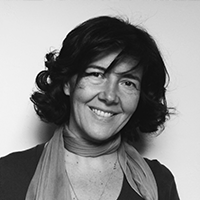
Claudia Manenti is an architect who graduated first in Florence and then at the Bologna University at the Architecture and Spatial Planning Department. It is here that Claudia Manenti achieved her PhD, which was about Places of identity and spaces of the holy in the contemporary European city. During her career, she was professor at the Architecture Faculty of Ferrara and Cesena.
Since 2008 she has been director of Dies Domini Centro Studi per l'architettura sacra, and la città della Fondazione Lercaro of Bologna. According to that, she organizes many conferences and meetings about the liturgical architecture. She is also member of the holy art Commission of both Bologna and Ravenna Dioceses.
Since 2008 she has been professor of Introduction to the liturgical architecture at the Bologna Pontifical Regional Seminary.
She has published several articles and essays, such as Architecture of temporary churches, BUP, Bologna, 2016; Places of identity and spaces of the holy in the contemporary European city, edited by FrancoaAngeli, Milan 2012; Cardinal Lercaro and the contemporary city (edited by) Editrice Compositori, Bologna, 2010; and Church and city fifty years after the Second Vatican Council (edited by) BUP, Bologna 2016.
In the meanwhile, she has been editing the series of publications of Centro Studi per l'architettura sacra della Fondazione Card. Giacomo Lercaro of the Bononia University Press – Bologna. Moreover, during her career she has also worked on several architectural projects and liturgical arrangements.
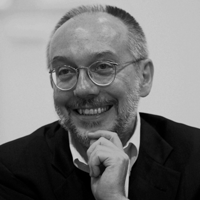
After studying architecture in Florence, Andrea Dall’Asta joined the Society of Jesus in 1988. Since 2002, he has directed the Galleria San Fedele in Milan and, from 2008 to 2020, the Raccolta Lercaro in Bologna. In 2014, he founded the Museo San Fedele. Itinerari di arte e fede (San Fedele Museum: Journeys of Art and Faith) in Milan. His focus is on the relationship among art, liturgy, and architecture. He has participated in important projects such as the liturgical adaptations of the cathedral of Reggio Emilia (2011) and the Basilica of Santa Maria Assunta in Gallarate (2018), the creation of the Ambrosian Gospel Book (2011), the Vatican Pavilion for the Venice Biennale (2013), and the section Disegnare il sacro (Drawing the Sacred) at the Venice Architecture Biennale (2014). He writes for several newspapers and magazines, including Avvenire and Civiltà Cattolica. He currently teaches at the Pontifical Theological Faculty of Naples (San Luigi section) and is a contract professor at the Brera Academy. With Àncora, he has published several works: Edward Hopper. Desire and Waiting (2023); Where God Lives. The dwellings of the divine in Athens, Rome, and Jerusalem (2022); The Cross and the Face. Journeys through art, cinema, and theology (revised and expanded edition, 2022); The light color of desire. Journeys through art and architecture, cinema, and theology from Impressionism to today (2021); The Hand of the Angel. Leonardo's Virgin of the Rocks. The Secret Revealed (2019); Light, Splendor of Truth, Journeys through Art, Architecture, and Theology from the Early Christian Era to the Baroque (2018).
Guided tour of the exhibition - Oltre i Percorsi (Beyond the Paths)
A project curated by Andrea Dall’Asta S.J. and Claudia Manenti
The exhibition OLTRE I PERCORSI (BEYOND THE PATHS) presents works of artists who participated in PERCORSI DI RIAVVICINAMENTO (APPROCHING PATHS): CONTEMPORARY ARTISTS CONFRONT THE CHRISTIAN MYSTERY proposed by the Scientific Committee of Devotio in 2017, 2019, 2022, and 2024.
Eleven young artists participated in an experience that led them to create a work of figurative sacred art suitable for display in a liturgical setting.
The themes explored in the four previous editions include the image of Mary, the Crucifix, the Supper at Emmaus, and the Risen Christ. The artists involved are Carlos Lalvay Estrada, Debora Fella, Ettore Frani, Arvin Golrokh, Saba Masoumian, Ismaele Nones, Daniela Novello, Luca Pianella, Alessandro Sanna, Norberto Spina, and Jacopo Zambello.
Each artist exhibits other creations, in addition to the work presented for the exhibition. Their works will not be necessarily of a sacred nature, that reflects witness to their personal journey of exploration and development. This experience has, in fact, become part of each artist's personal human, spiritual, and creative journey, and the opportunity to include the work they created for PATHS within a personal creative cross-section allows for a deeper understanding of the specific characteristics of each artist's proposal.
The exhibition OLTRE I PERCORSI (BEYOND THE PATHS), which brings together all the works created for this project, aims to provide a summary of the experimentation carried out to date in terms of involving talented young artists in themes of Christian spirituality, relaunching as a further proposal a creative vision that demonstrates the possibility of ecclesial involvement of artists capable of interpreting the religious sensibility of Catholic communities.
The language of images has always been fundamental to the spiritual and cultural growth of the Church, and with today's initiative, in addition to that of PERCORSI, we aimed to bridge the communication gap that has arisen between art and faith in the 20th Century. With the PERCORSI project, the results of which are on display, offering young artists a path with stages of spirituality and training on the themes of Christian art, it has demonstrated to the art world and the ecclesial community that contemporary artistic language, if properly supported, can interpret, today as in past centuries, the Church’s desire to see the mysteries of the Christian faith represented in a comprehensible form.
The exhibition OLTRE I PERCORSI (BEYOND THE PATHS) presents works of artists who participated in PERCORSI DI RIAVVICINAMENTO (APPROCHING PATHS): CONTEMPORARY ARTISTS CONFRONT THE CHRISTIAN MYSTERY proposed by the Scientific Committee of Devotio in 2017, 2019, 2022, and 2024.
Eleven young artists participated in an experience that led them to create a work of figurative sacred art suitable for display in a liturgical setting.
The themes explored in the four previous editions include the image of Mary, the Crucifix, the Supper at Emmaus, and the Risen Christ. The artists involved are Carlos Lalvay Estrada, Debora Fella, Ettore Frani, Arvin Golrokh, Saba Masoumian, Ismaele Nones, Daniela Novello, Luca Pianella, Alessandro Sanna, Norberto Spina, and Jacopo Zambello.
Each artist exhibits other creations, in addition to the work presented for the exhibition. Their works will not be necessarily of a sacred nature, that reflects witness to their personal journey of exploration and development. This experience has, in fact, become part of each artist's personal human, spiritual, and creative journey, and the opportunity to include the work they created for PATHS within a personal creative cross-section allows for a deeper understanding of the specific characteristics of each artist's proposal.
The exhibition OLTRE I PERCORSI (BEYOND THE PATHS), which brings together all the works created for this project, aims to provide a summary of the experimentation carried out to date in terms of involving talented young artists in themes of Christian spirituality, relaunching as a further proposal a creative vision that demonstrates the possibility of ecclesial involvement of artists capable of interpreting the religious sensibility of Catholic communities.
The language of images has always been fundamental to the spiritual and cultural growth of the Church, and with today's initiative, in addition to that of PERCORSI, we aimed to bridge the communication gap that has arisen between art and faith in the 20th Century. With the PERCORSI project, the results of which are on display, offering young artists a path with stages of spirituality and training on the themes of Christian art, it has demonstrated to the art world and the ecclesial community that contemporary artistic language, if properly supported, can interpret, today as in past centuries, the Church’s desire to see the mysteries of the Christian faith represented in a comprehensible form.
Speakers
Claudia Manenti
Director of Fondazione CENTRO STUDI PER L'ARCHITETTURA SACRA "Cardinale Giacomo Lercaro”
Claudia Manenti is an architect who graduated first in Florence and then at the Bologna University at the Architecture and Spatial Planning Department. It is here that Claudia Manenti achieved her PhD, which was about Places of identity and spaces of the holy in the contemporary European city. During her career, she was professor at the Architecture Faculty of Ferrara and Cesena.
Since 2008 she has been director of Dies Domini Centro Studi per l'architettura sacra, and la città della Fondazione Lercaro of Bologna. According to that, she organizes many conferences and meetings about the liturgical architecture. She is also member of the holy art Commission of both Bologna and Ravenna Dioceses.
Since 2008 she has been professor of Introduction to the liturgical architecture at the Bologna Pontifical Regional Seminary.
She has published several articles and essays, such as Architecture of temporary churches, BUP, Bologna, 2016; Places of identity and spaces of the holy in the contemporary European city, edited by FrancoaAngeli, Milan 2012; Cardinal Lercaro and the contemporary city (edited by) Editrice Compositori, Bologna, 2010; and Church and city fifty years after the Second Vatican Council (edited by) BUP, Bologna 2016.
In the meanwhile, she has been editing the series of publications of Centro Studi per l'architettura sacra della Fondazione Card. Giacomo Lercaro of the Bononia University Press – Bologna. Moreover, during her career she has also worked on several architectural projects and liturgical arrangements.
Andrea Dall'Asta S.J.
Director of Galleria/Museo S. Fedele, Milano
After studying architecture in Florence, Andrea Dall’Asta joined the Society of Jesus in 1988. Since 2002, he has directed the Galleria San Fedele in Milan and, from 2008 to 2020, the Raccolta Lercaro in Bologna. In 2014, he founded the Museo San Fedele. Itinerari di arte e fede (San Fedele Museum: Journeys of Art and Faith) in Milan. His focus is on the relationship among art, liturgy, and architecture. He has participated in important projects such as the liturgical adaptations of the cathedral of Reggio Emilia (2011) and the Basilica of Santa Maria Assunta in Gallarate (2018), the creation of the Ambrosian Gospel Book (2011), the Vatican Pavilion for the Venice Biennale (2013), and the section Disegnare il sacro (Drawing the Sacred) at the Venice Architecture Biennale (2014). He writes for several newspapers and magazines, including Avvenire and Civiltà Cattolica. He currently teaches at the Pontifical Theological Faculty of Naples (San Luigi section) and is a contract professor at the Brera Academy. With Àncora, he has published several works: Edward Hopper. Desire and Waiting (2023); Where God Lives. The dwellings of the divine in Athens, Rome, and Jerusalem (2022); The Cross and the Face. Journeys through art, cinema, and theology (revised and expanded edition, 2022); The light color of desire. Journeys through art and architecture, cinema, and theology from Impressionism to today (2021); The Hand of the Angel. Leonardo's Virgin of the Rocks. The Secret Revealed (2019); Light, Splendor of Truth, Journeys through Art, Architecture, and Theology from the Early Christian Era to the Baroque (2018).