Conferences and Events Program
CONFERENCE - Liturgical space: place of faith, cultural asset
It is true that churches are very often treasure troves of artworks of art and spaces well-suited to host collective events, but the evaluation of their "cultural asset" must be carefully balanced with the liturgical purpose for which these buildings were originally constructed.
What is the relationship between architecture and liturgy in the virtual age? What are the new liturgical guidelines that require new architectural adaptations? What guidelines should be followed for the renovation of churches and for new experimentations with liturgical adaptations?
These are some of the topics that will be addressed by the conference speakers, who will also reflect on the correct ways to use celebratory spaces for cultural and extraliturgical purposes.
Moderator: Luca Tentori, Journalist
Speakers:
Session I - Introduction to liturgical space:
- mons.Giovanni Di Napoli, Vice-President of CAL - Center for Liturgical Action, Archbishop of the Diocese of Catanzaro-Squillace
Liturgy and the life of the church - Claudia Manenti, Director of the “Cardinal Giacomo Lercaro” Center for Studies in Sacred Architecture Foundation
Architecture and liturgical participation
Session II - Experiencing liturgy in architectural space:
- fr. Paolo Tomatis, Director of the Liturgical Office of the Diocese of Turin
Virtuous methods and new directions - Francesca Leto, Architect
Possible critical issues in liturgical adaptations
Session III - Events and collateral uses in churches:
- fr. Stefano Culiersi, Director of the Liturgical Office of the Church of Bologna
Opportunities and oversights in the non-liturgical use of churches for events. - Giovanni Gardini, Director of the Lercaro Art Museum
Art in churches no longer in use
Session IV - Renovations and new liturgical arrangements: what directions to take:
- Giorgio Della Longa, Architect
The relationship between the arrangement of liturgical centers and church architecture - Silvia Tarantelli, Liturgist
Liturgical experimentation in Mantua Cathedral
Speakers

Luca Tentori, a professional journalist, who works at the Archdiocese of Bologna for the diocesan weeklies "Avvenire - Bologna7" (print) and "12Porte" (television). He has also collaborated with Vatican Radio and Edizioni Dehoniane Bologna. Tentori is a doctoral student at the Theological Faculty of Emilia-Romagna, specializing in "Teologia dell’evangelizzazione" (Theology of Evangelization)
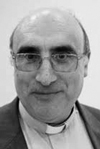
Monsignor Di Napoli was born in Laureana Cilento (SA) on April 5, 1957, and has been a priest since 1982.
After studying philosophy and theology at the Pontifical Theological Faculty of Southern Italy – San Luigi section (Naples), he continued his studies at the Pontifical Liturgical Institute in Rome, where he obtained a doctorate in Sacred Liturgy in 1990.
Since 1997, he has taught Liturgy and Fundamental Sacramentary at the San Luigi section of the Theological Faculty of Naples and has been a lecturer and also Director of the ISSR in Vallo della Lucania. From 1995 to 2001, he also taught Liturgy courses at the Theological Institute of Basilicata in Potenza.
He is parish priest and director of the Diocesan Liturgical Office and responsible for liturgy for the ecclesiastical region of Campania, while in the past he was also spiritual director and then rector of the minor seminary.
He has published articles in Ecclesia orans, of which he was recently appointed a member of the external scientific committee, and in Rassegna di Teologia, Marianum, Rivista Liturgica, Liturgia, and Rivista di Pastorale Liturgica, as well as contributions in various miscellanies.
He currently serves as Episcopal Vicar for Pastoral Coordination at the Diocesan Curia and as vice president of the Centro Azione Liturgica (CAL), the association of liturgy scholars and pastoral workers established by the Italian Episcopal Conference. The CAL serves the Churches in Italy in order to enable Christian communities to live what they celebrate and to participate with intelligence.
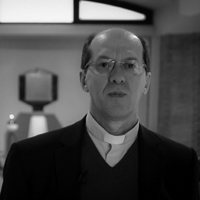
Don Paolo Tomatis (born in Turin, 1968) has been a priest of the Archdiocese of Turin since 1993. In 2007, he earned a doctorate in Sacred Liturgy from the Pontifical Liturgical Institute of St. Anselm in Rome, with a thesis on the relationship between aesthetics and liturgy (Accende lumen sensibus. La liturgia e i sensi del corpo, CLV, Rome 2010). He serves as Professor of Liturgy at the Theological Faculty of Northern Italy (Milan, Turin) and at the Institute of Pastoral Liturgy in Padua - Santa Giustina. Throughout his career, he has balanced his academic activities and teaching with pastoral responsabilities in the Diocesan Liturgical Office, where he was director from 2005 to 2025.
Since 2006, he has been a member of the editorial staff of Rivista Liturgica and, from 2007 onward, has served on the Council of the National Liturgical Office of the CEI. Since 2023, he has directed the Interdiocesan Institute “Percorsi”, dedicated for the formation of instituted ministries.
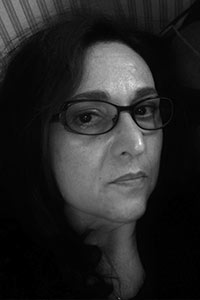
Francesca Leto graduated in architecture in Venice and obtained her licentiate and doctorate in Theology with a specialization in Pastoral Liturgy at the Institute of Pastoral Liturgy of St. Giustina in Padua (Pontifical Athenaeum of St. Anselm in Rome) with a thesis on sacred space. She is a member of the National Council for Liturgical Pastoral Care and the Association of Professors of Liturgy. She currently serves as an adjunct professor at the Theological Faculty of Central Italy in Florence, where she teahes in the Licentiate in Dogmatic Theology program and the Advanced Training in Theology and Art program. She is also a professor of Liturgy, Sacramentals, and various seminars at the Institute of Religious Sciences in Vicenza. She was the winner of the sixth edition of the CEI pilot project competition for the church of Sant'Ignazio in Olbia. as well as for the liturgical adaptation of the Cathedral of Belluno. She still participates as an architect or liturgist in different competitions for new churches. Her work focuses on liturgical adaptations and church restorations, as well as the design of chapels. She regularly gives lectures and prsentations in various accademic and ecclesial contexts, including the Polytechnic University of Milan, the Triveneto Theological Faculty, ISSR Padua, Pontifical Athenaeum of Sant'Anselmo, Beato Angelico School, Koinè. As a liturgist, she has led study trips organized by the National Liturgical Office and the CEI Office for Cultural Heritage in the dioceses of Bolzano-Bressanone and Bari. She is the author of several articles in both national and international journals and publications.
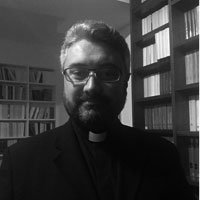
He was born in Bologna in 1975 and was ordained priest in 2000. Culiersi obtained a Licentiate in Theology from FTER in 2007 and a Licentiate in Liturgy from ILP “St. Giustina” in 2015.In 2025, he completed his doctoral thesis in Liturgy. Since 2019, he has been Director of the Liturgical Office of the Diocese of Bologna and as parish priest in the historic center of that same city. He is a member of the Scientific Committee of DEVOTIO and of the Fondazione Centro Studi per l'Architettura Sacra (Foundation for the Study of Sacred Architecture).
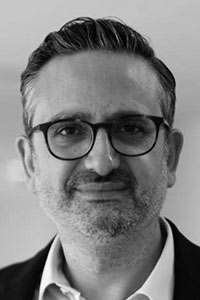
Giovanni Gardini obtained a Baccalaureate in Theology and a Licence in Theology of Evangelisation at the Academic Theological Study of Bologna. He is currently an associate professor at the Theological Faculty of San Tommaso d’Aquino in Rome. After getting his diploma at the Accademia di Belle Arti in Ravenna, he obtained both a Baccalaureate and a Licence in Christian archaeology at the Pontificio Istituto of Christian Architecture, in Rome. Giovanni’s master's degree was about History, protection and conservation of pieces of art and he graduated at the Faculty of Cultural Heritage at the Bologna University, in Ravenna. He has always been engaged in the research and dissemination of the artistic heritage, with a special focus on the Christian iconographic tradition. He has played the pivotal role of curator in many different exhibitions and conferences. Giovanni has also written several articles and essays, and he currently teaches at the Higher Institutes of Religious Sciences in Rimini and Florence. He holds the positions of director of the Diocesan Museum and the Card. Cicognani of the Diocese of Faenza-Modigliana and Director of the Cardinal Giacomo Lercaro Museum of Art in Bologna. In addition, he is a publicist journalist. For the following five-year period 2020-2025, he has been holding the position of President AMEI, Association of Italian Ecclesiastical Museums.
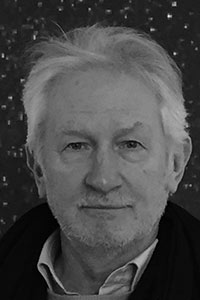
He was born in Udine and he is an architect, having graduated from IUAV in Venice. He has conductes research on new ecclesiastical architecture as well as on the adaptation and enhancement of existing church buildings. He regularly participates as a speaker at national and international conferences on these topics. He has collaborated with the offices of the Italian Episcopal Conference (CEI) in organizing the conferences “Art, Architecture, Liturgy: A Comparison of International Experiences”, held as part of the Venice Biennale. Della Longa is the author of a research regarding liturgical space in relation to the reform promoted by the Second Vatican Council, including monographs on the state of adaptation of cathedrals in the Triveneto and Emilia-Romagna regions. He is the author of research on the enhancement of ecclesiastical space, including "Celebrating with Light. Enhancement of churches with historical and artistic value: liturgy and technology". He was a member of the Scientific Commission for the lighting of liturgical spaces as part of the Luce per le chiese (Light for Churches) initiative, promoted by AIDI with the patronage of the CEI Offices for Cultural Heritage and Religious Buildings. He is a member of the Scientific Committees, such as CIARC_Congreso Internacional de Arquitectura Religiosa Contemporánea, the Frate Sole Foundation in Pavia, and the Foundation Center for the Study of Sacred Architecture in Bologna.
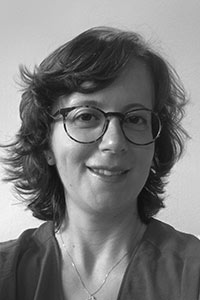
Silvia Tarantelli currently teaches Liturgy at the San Pietro Martire Higher Institute of Religious Sciences in Verona and religion in high schools. She holds a doctorate in Theology with a specialization in Liturgy and Pastoral care from the St. Giustina Institute of Pastoral Liturgy in Padua. She deals with epistemological and anthropological issues related to the sacrament of penance, as well as liturgical adaptations of cathedrals in Italy. She won the competition for the adaptation of the Cathedral of Sessa Aurunca, together with architect A. Vaccari and artist L. Cavalca. She has also worked on the adaptation of the Cathedral of Mantua, together with architect Giorgio Della Longa. He is a member of the editorial staff of the journals Esperienza e Teologia and Pastorale Liturgica. Tarantelli has published several articles in Rivista Liturgica, Rivista di Pastorale Liturgica, and La Maison-Dieu. She is also involved in liturgical formation throughout Italy, particularly in relation to the care of ministries and liturgical languages.
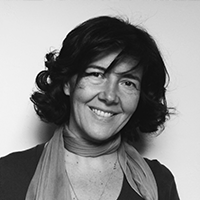
Claudia Manenti is an architect who graduated first in Florence and then at the Bologna University at the Architecture and Spatial Planning Department. It is here that Claudia Manenti achieved her PhD, which was about Places of identity and spaces of the holy in the contemporary European city. During her career, she was professor at the Architecture Faculty of Ferrara and Cesena.
Since 2008 she has been director of Dies Domini Centro Studi per l'architettura sacra, and la città della Fondazione Lercaro of Bologna. According to that, she organizes many conferences and meetings about the liturgical architecture. She is also member of the holy art Commission of both Bologna and Ravenna Dioceses.
Since 2008 she has been professor of Introduction to the liturgical architecture at the Bologna Pontifical Regional Seminary.
She has published several articles and essays, such as Architecture of temporary churches, BUP, Bologna, 2016; Places of identity and spaces of the holy in the contemporary European city, edited by FrancoaAngeli, Milan 2012; Cardinal Lercaro and the contemporary city (edited by) Editrice Compositori, Bologna, 2010; and Church and city fifty years after the Second Vatican Council (edited by) BUP, Bologna 2016.
In the meanwhile, she has been editing the series of publications of Centro Studi per l'architettura sacra della Fondazione Card. Giacomo Lercaro of the Bononia University Press – Bologna. Moreover, during her career she has also worked on several architectural projects and liturgical arrangements.