
Lorenfa
Between traditional art and 3D scanning
Between traditional art and 3D scanning
Fabio Simeone's interview, Founder and Owner of LORENFA Srl.
Could you briefly introduce your company and your production?
Lorenfa is an Italian company that combines traditional art, advanced 3D technologies, and high-quality craftsmanship. Since 1996, we have been working alongside museums, cultural institutions, and religious organizations to create 3D scans, artistic reproductions, and customized merchandising projects, always with a tailor-made approach. In the museum sector, we collaborate with internationally renowned institutions such as the Colosseum and St. Peter’s Basilica in the Vatican for the digitization and reproduction of works of art, creating 1:1 copies, miniatures, and educational replicas designed for enhancement, conservation, and cultural dissemination. All our reproductions originate from extremely high-precision 3D scans and are finished by hand by Italian artists, in line with a philosophy we define as craftsmanship 3.0. Alongside this, Lorenfa’s roots lie in religious production, which remains fundamental to this day, through the creation of sacred statues, busts, and devotional reproductions designed for shrines, churches, and religious communities. In this field, we place particular emphasis on respect for iconography, aesthetic quality, and the liturgical functionality of the works. Our offering is completed by a customized merchandising and packaging service, developed using eco-sustainable materials, PEFC™-certified paper, and ecological inks and varnishes, to provide products that combine cultural value, identity, and environmental responsibility.
How do you assess the current situation and prospects of the religious articles market?
The Italian market for religious articles is currently selective: it does not grow in terms of volume, but it grows in terms of quality. There is less room for standard products and increasing attention to well-crafted items that are iconographically accurate and designed to last over time. Those operating in this sector must be able to offer reliability, artistic expertise, and practical solutions, such as lighter statues, safe materials, and controlled production processes. At the same time, I notice a growing interest in products that combine tradition, technology, and sustainability. The outlook is positive for companies that focus on the true value of the object, on Italian craftsmanship, and on a serious dialogue with religious communities. Today, it is no longer enough to sell an item: one must give meaning and recognizable quality to what is being offered.
The fifth edition of Devotio is approaching. What do you expect from this trade fair?
From Devotio, I primarily expect dialogue and concreteness. It is a fair that has grown over the years and today represents a solid meeting point between companies, religious institutions, and professionals who work seriously in the sector. For us, it is an opportunity to listen to the real needs of the market, understand how demands are changing, and present practical solutions: well-crafted, reliable products designed for real use, not just for display. I expect a fair that is increasingly oriented toward quality, professionalism, and dialogue, and less toward quantity. It is precisely in this context that companies like ours can bring value, by combining tradition, technology, and respect for the profound meaning of religious articles.
Will you be presenting any new products at “Devotio 2026”? Which ones?
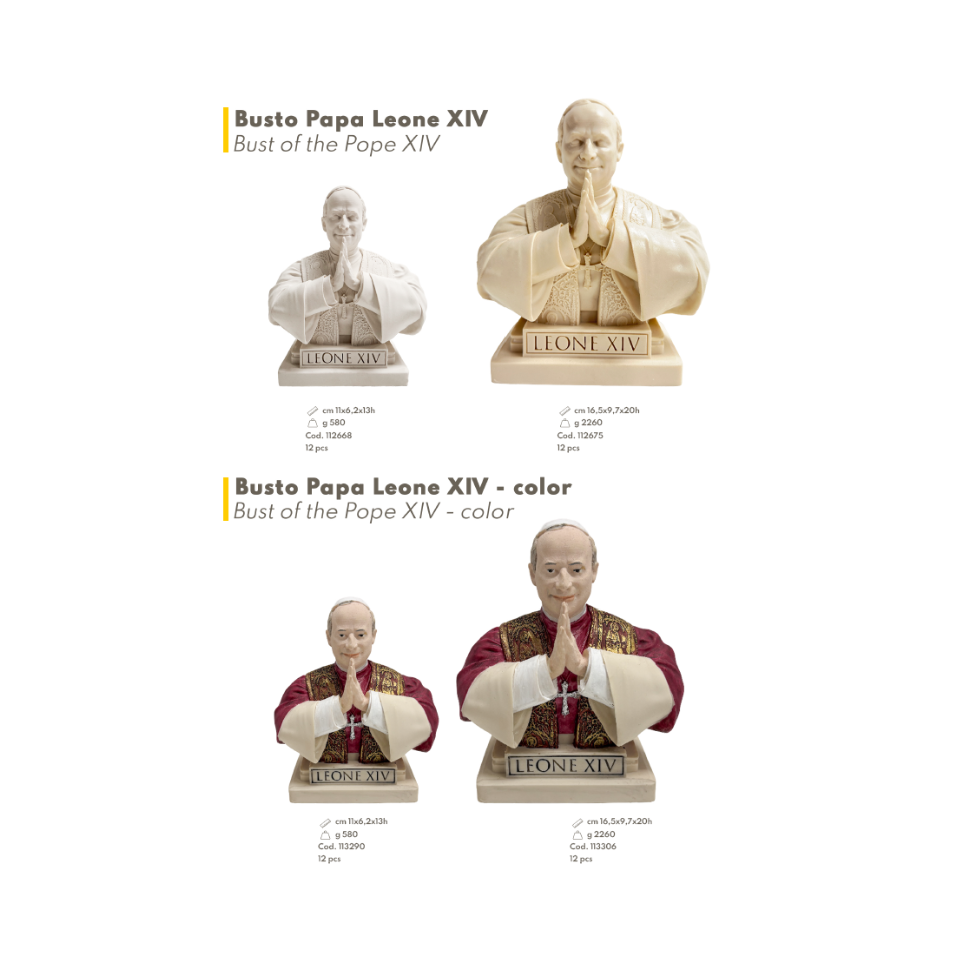
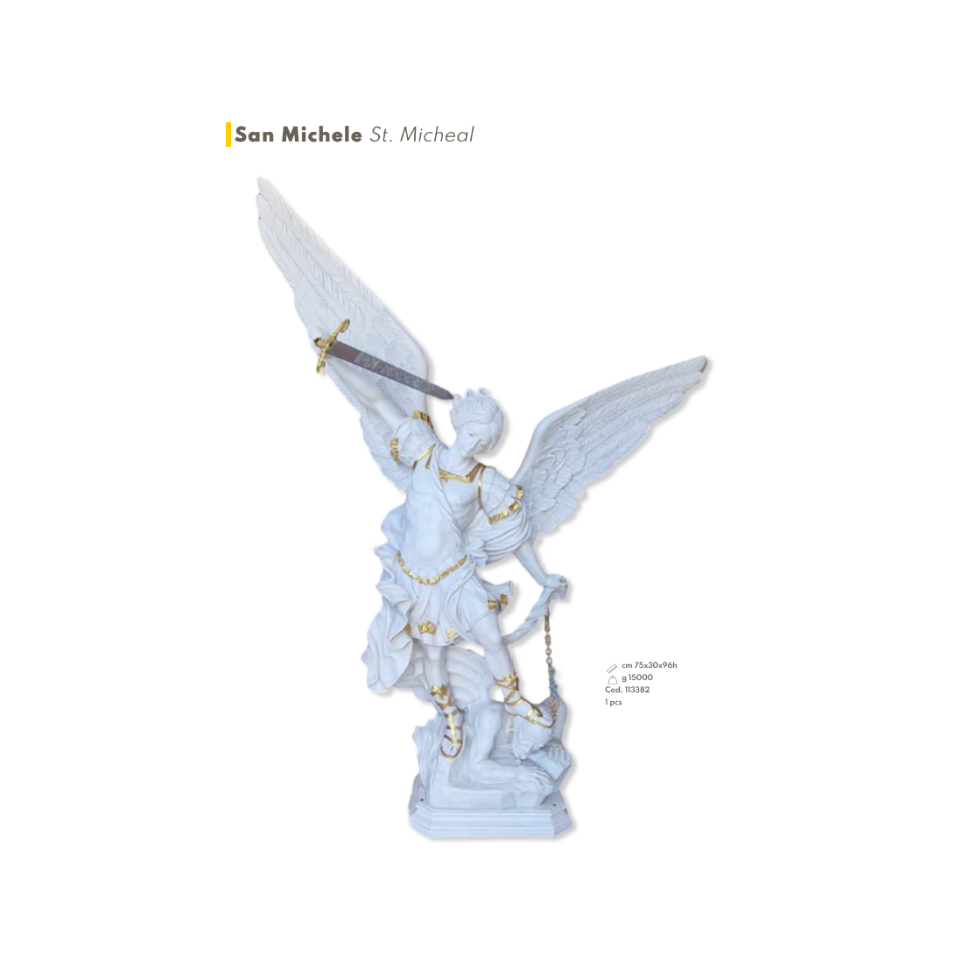
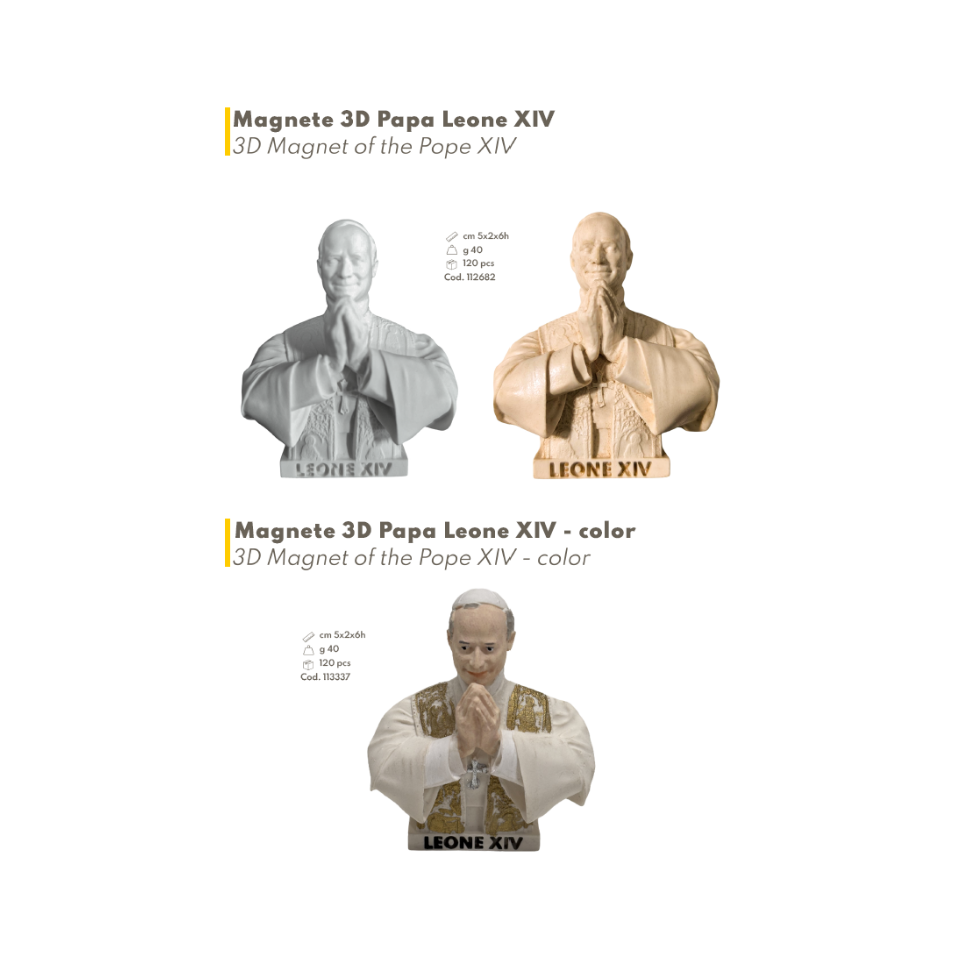
Certainly, at Devotio 2026 we will be presenting very concrete innovations, and those I am previewing here are only some of what we will showcase. In particular, we will launch a new line of faithful reproductions of the Archangel Saint Michael, made from marble powder and available in different scales, up to a one-meter-tall model. Some versions will feature gold details, while others will have a special flesh tone that we have called “skin,” designed to give the figure greater naturalness and presence. In addition, we will present the reproduction of the bust and statue of the new Pope Leo XIV, a project that is very important to us: we are the first in the world to have obtained the official licensing concession to produce it. This reproduction stems from the skill of our sculptors and the use of 3D technologies, which allowed us to create the digital model exclusively from an official photograph of the Pope. These innovations clearly represent our way of working: respect for iconography, quality of materials, and attention to what is truly needed by churches, shrines, and religious communities, as well as by bookshops and merchandise stores.